
What are IXPs?
Internet Exchange Points (IXPs) are Internet hubs. They allow local networks of all types (Internet service providers, transport providers, Tier 1 carriers, mobile networks, education networks, AI data centers, and cloud and content providers—such as Google or Amazon) to “meet,” or directly connect with one another locally to exchange data traffic. This is called “peering.”
Think of air travel. If every connecting flight had to go through one distant airport, a short trip between two nearby towns would mean flying hundreds of miles out and back. Regional airport hubs let passengers connect closer to home. IXPs do the same for internet traffic: networks in the same region hand traffic to each other locally instead of sending it to a distant city and back.
- IXP
- The facility: a neutral building where networks bring their fiber and connect.
- IX
- The exchange switch inside it. One connection can reach many networks on the exchange.
- Peering
- Two networks exchanging traffic directly instead of paying to route it through a third.
- IP transit
- Wholesale access to the rest of the internet, bought from a carrier.
How an IXP works
-
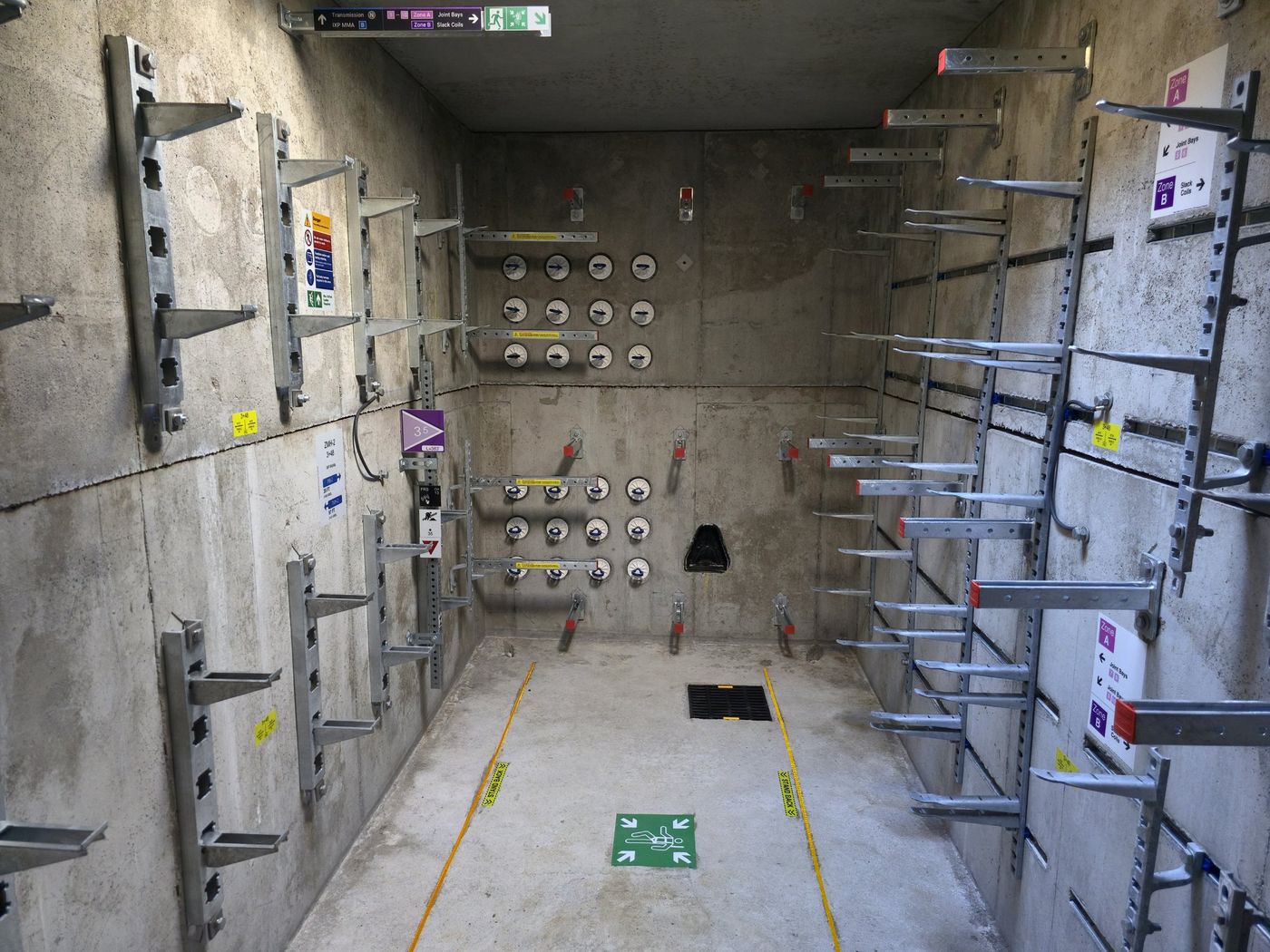
Bring fiber in
Networks enter the building through diverse, protected fiber pathways.
-
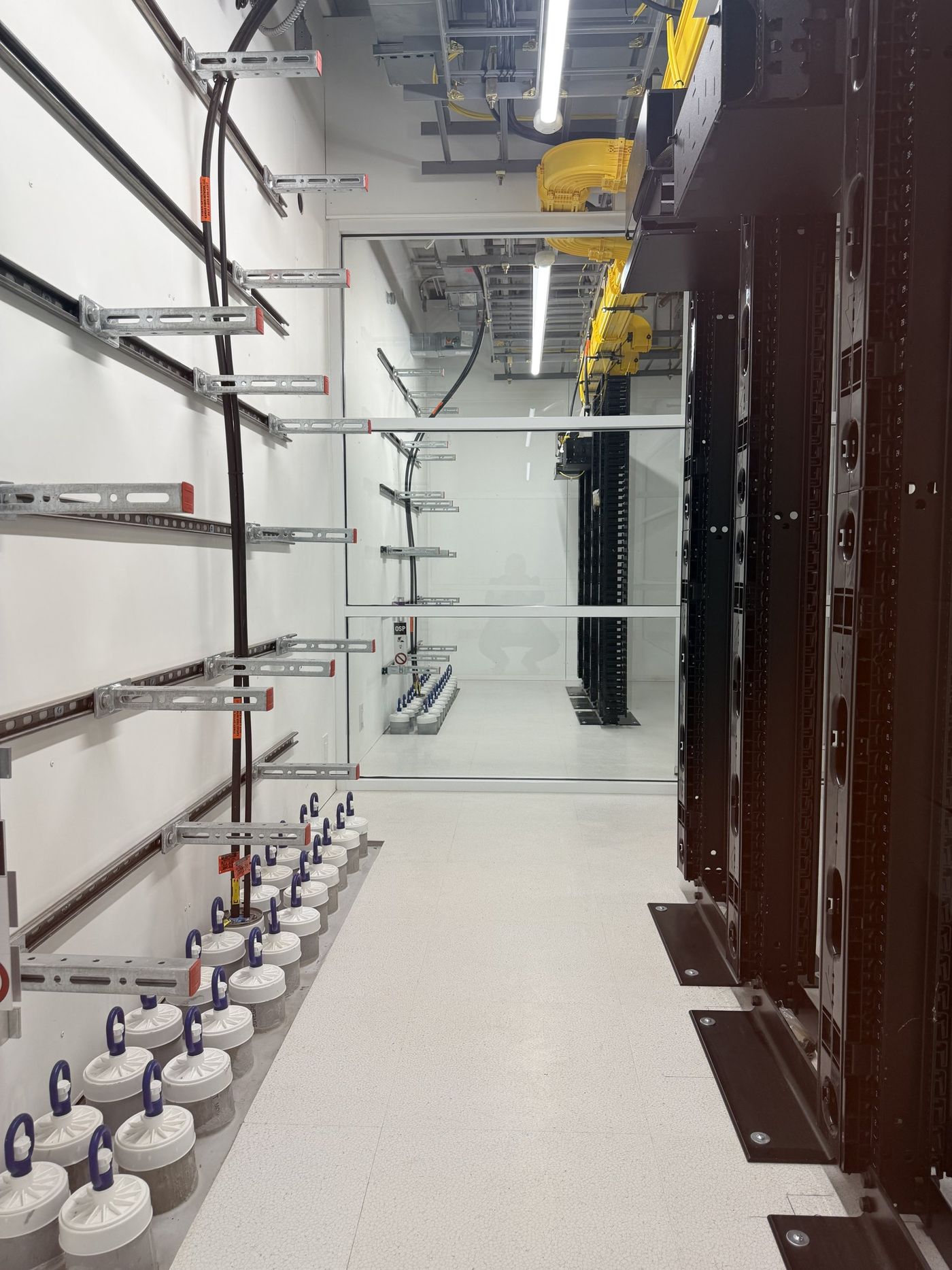
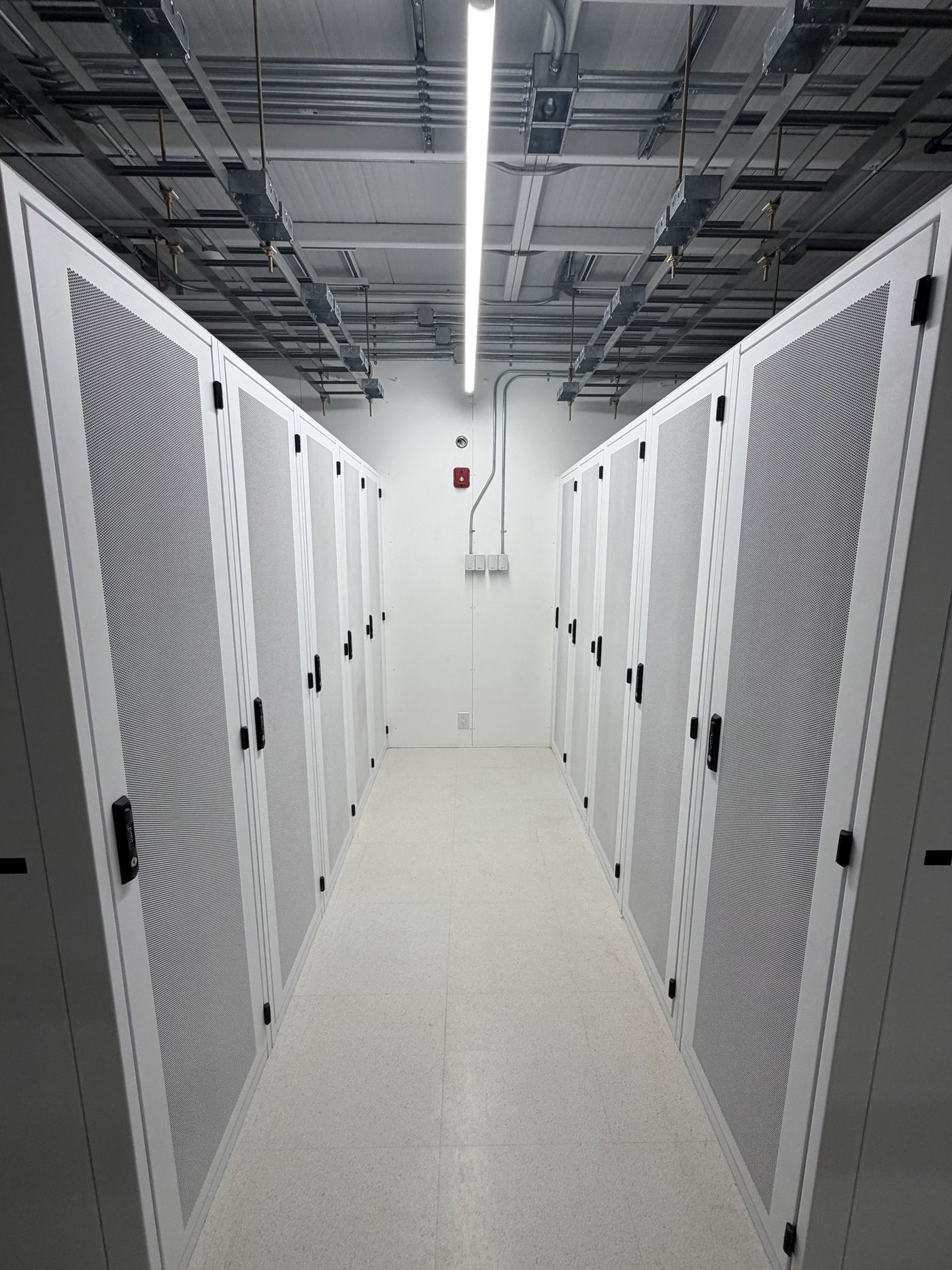
Meet in one room
Each network places its equipment in secured colo cabinet(s).
-

Connect
Networks cross-connect privately with a chosen partner, or take a port on the IX to peer with many networks at once.
-
Reach further
Links to national exchanges and cloud providers carry that reach far beyond the region.
Why more IXPs are needed
IXPs literally make the Internet work better.
The closer you are to an IXP, the better your Internet performance will be. This happens by reducing what’s called “latency,” or lag time. IXPs also keep data traffic local that needs to stay local, making the routing of internet traffic more efficient and freeing up long-haul capacity for other uses.
IXPs exist in 57 metro areas across the U.S.
But 14 states and 3 U.S. territories have no IXP at all. An additional 3 states have failing or functionally limited facilities.
In communities without an IXP, Internet traffic is “backhauled” to cities that may be hundreds of miles away.
Smaller cities, towns, and rural areas are fully dependent on remote cities for Internet performance. If a natural disaster or terrorist event were to impact those cities, connectivity to the global Internet could go down or be significantly impaired.
Future Internet performance is at risk without a local IXP.
As the Internet continues to evolve, reducing latency will be incredibly important. Autonomous vehicles, drones, artificial intelligence, video streaming, virtual reality, and precision agriculture will require ultra-low-latency connections—latency values that aren’t achievable in regions without an IXP.
IXPs lower wholesale costs for everyone.
Because IXPs are a hub for multiple networks, they naturally become a marketplace for wholesale Internet access (called “IP transit”).
The next wave of AI runs on milliseconds
Training, inference and physical AI are already happening side by side. The newest applications answer in real time and act in the physical world, and they leave very little room for distance.
Where the milliseconds go
Each application has a delay budget for the whole trip. Here's how much of it distance alone can use on real-world fiber routes.
- Voice and video callsBudget: approximately 300 ms round trip
- AR and VRBudget: approximately 20 ms, motion to display
- Robotics and industrial controlBudget: up to 10 ms (often as little as 1 ms)
The constant: the speed of light
Light in fiber covers approximately 124,000 miles a second, and no software update changes that. But fiber follows roads, rail lines and existing conduit, so real routes run approximately twice the straight-line distance. The reliable way to cut the delay is to shorten the path by exchanging traffic closer to home.
Budgets are end-to-end: ITU-T G.114 (voice, under 150 ms one way); 3GPP TR 26.918 and industry research (AR/VR, approximately 20 ms); 3GPP TR 22.804 (industrial automation, 1 to 10 ms). * Real-world estimate: light in fiber at approximately 124 miles per millisecond, over routes approximately 2.1 times the straight-line distance between two points, the rule of thumb from U.S. latency measurements reported in Bozkurt et al., “Dissecting Latency in the Internet’s Fiber Infrastructure” (2018). The same estimate is used for the distant-hub figures above.
For broadband offices and policymakers
Interconnection is broadband infrastructure
Treat interconnection as critical infrastructure
A region without an IXP depends on distant cities, sometimes a single building, to exchange its traffic. If that path fails, the region's connection to the rest of the internet fails with it. IXPs belong in resilience and broadband plans.
Build for decades
Conduit, fiber and interconnection are built once and used for generations. An IXP draws new fiber construction toward it, making the surrounding area more attractive to network-dependent employers.